
As the frost nips at your windows and the world outside dulls to gray, nothing beckons warmth quite like a steaming bowl of Hearty Korean Winter Soup. This savory delight is a cozy one-pot meal that combines tender beef brisket, vibrant napa cabbage, and silky tofu in a rich, spicy broth. Perfectly crafted to ward off the chill, this comforting soup not only makes cleanup a breeze but also serves as a joyful gathering point for family and friends. Whether you’re sneaking in some extra veggies or swapping proteins for dietary preferences, this dish invites creativity while embracing the traditional flavors of comforting Korean cuisine. Are you ready to dive into flavors that will hug your soul?
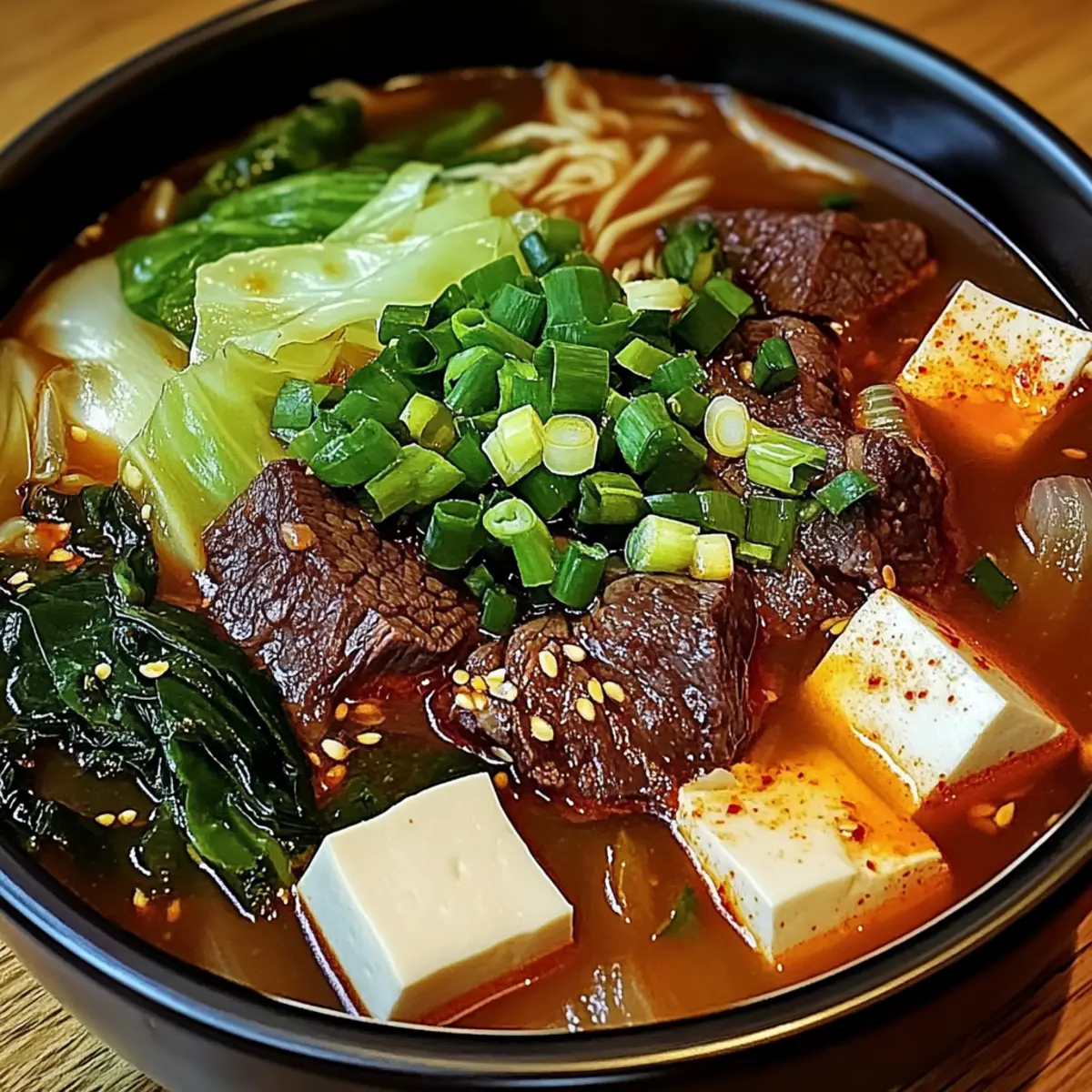
Why is Savory Korean Winter Soup Irresistible?
Comforting Warmth: With each spoonful, this savory soup offers a delightful hug from the inside out, perfect for those chilly nights.
One-Pot Wonder: This recipe simplifies cooking—less time cleaning up means more time enjoying meals with loved ones.
Customizable Goodness: Easily adapt for everyone’s tastes with beef, chicken, or a vegetarian version, ensuring all dietary preferences are met.
Flavor-Packed: The rich broth, infused with umami from soy sauce and a kick from gochujang, delivers an explosion of comforting flavors.
Crowd Pleaser: Ideal for family gatherings, this soup not only nourishes but fosters connection, bringing everyone together over a hearty bowl.
Savory Korean Winter Soup Ingredients
For the Broth
- Beef Brisket – The star protein that delivers a hearty, flavorful base; can substitute with chuck roast or short ribs.
- Water – Essential for creating the soup’s satisfying broth; no substitutions needed.
- Soy Sauce – Adds a deep, umami flavor to the soup; tamari works perfectly for a gluten-free option.
- Gochujang (Korean red pepper paste) – Infuses heat and depth; mix with miso paste and chili powder for a great alternative.
- Gochugaru (Korean red pepper powder) – Offers spice and vibrant color; crushed red pepper flakes serve as a good substitute.
- Garlic (minced) – Brightens up the flavor profile; no substitutions necessary.
- Onion (chopped) – Provides additional sweetness and layers of flavor; no replacements required.
For the Veggies
- Napa Cabbage – Adds a delightful crunch and texture; bok choy or green cabbage can be used instead.
- Firm Tofu (pressed and cubed) – Delivers creaminess and protein; swap for eggplant in a vegan variation if desired.
- Daikon Radish (sliced) – Brings a subtle sweetness and freshness; white radish or turnips can also work well.
For the Finishing Touches
- Sesame Oil – A flavorful drizzle to enhance the dish; no substitutions required.
- Green Onions (sliced) – For garnishing, lending a fresh touch; optional but highly recommended.
- Salt and Pepper – Crucial for balancing flavors to your taste; adjust as desired.
For Serving
- Cooked White Rice – Served alongside to complement the soup beautifully; cooked udon noodles can serve as a heartier alternative.
This Savory Korean Winter Soup is designed to envelop you in warmth and comfort, making it the perfect recipe for chilly evenings!
Step‑by‑Step Instructions for Savory Korean Winter Soup
Step 1: Prepare the Beef Broth
In a large pot, combine the beef brisket with enough water to fully cover it, about 6 cups. Bring to a vigorous boil over high heat, then reduce the heat to a simmer. Allow the broth to simmer gently for 30 minutes, skimming off any impurities that rise to the surface for a clearer, cleaner soup base.
Step 2: Flavor the Broth
Once the beef is tender, stir in the soy sauce, gochujang, gochugaru, and minced garlic. Continue to simmer for an additional 5 minutes, allowing the rich, spicy flavors of the broth to develop. The broth should be vibrant and fragrant, indicating that the ingredients are infusing wonderfully.
Step 3: Add the Vegetables
Introduce the chopped onion, napa cabbage, cubed tofu, and sliced daikon radish into the pot. Stir well to incorporate the ingredients and let the soup simmer for another 20 minutes. As the vegetables soften, they will release their flavors, creating a colorful and hearty mixture in your Savory Korean Winter Soup.
Step 4: Sauté the Green Onions
In a separate small pan, heat a splash of sesame oil over medium heat. Once hot, add the sliced green onions and sauté for 2–3 minutes, until they become fragrant and slightly caramelized. This step adds an aromatic touch to your soup that enhances its overall flavor profile.
Step 5: Final Seasoning and Serve
Taste the soup and adjust the seasoning with salt and pepper according to your preference. Serve the Savory Korean Winter Soup piping hot, with a steaming bowl of cooked white rice on the side for a perfect meal. The soup’s rich flavors and nourishing ingredients create a comforting dining experience you and your loved ones will cherish.
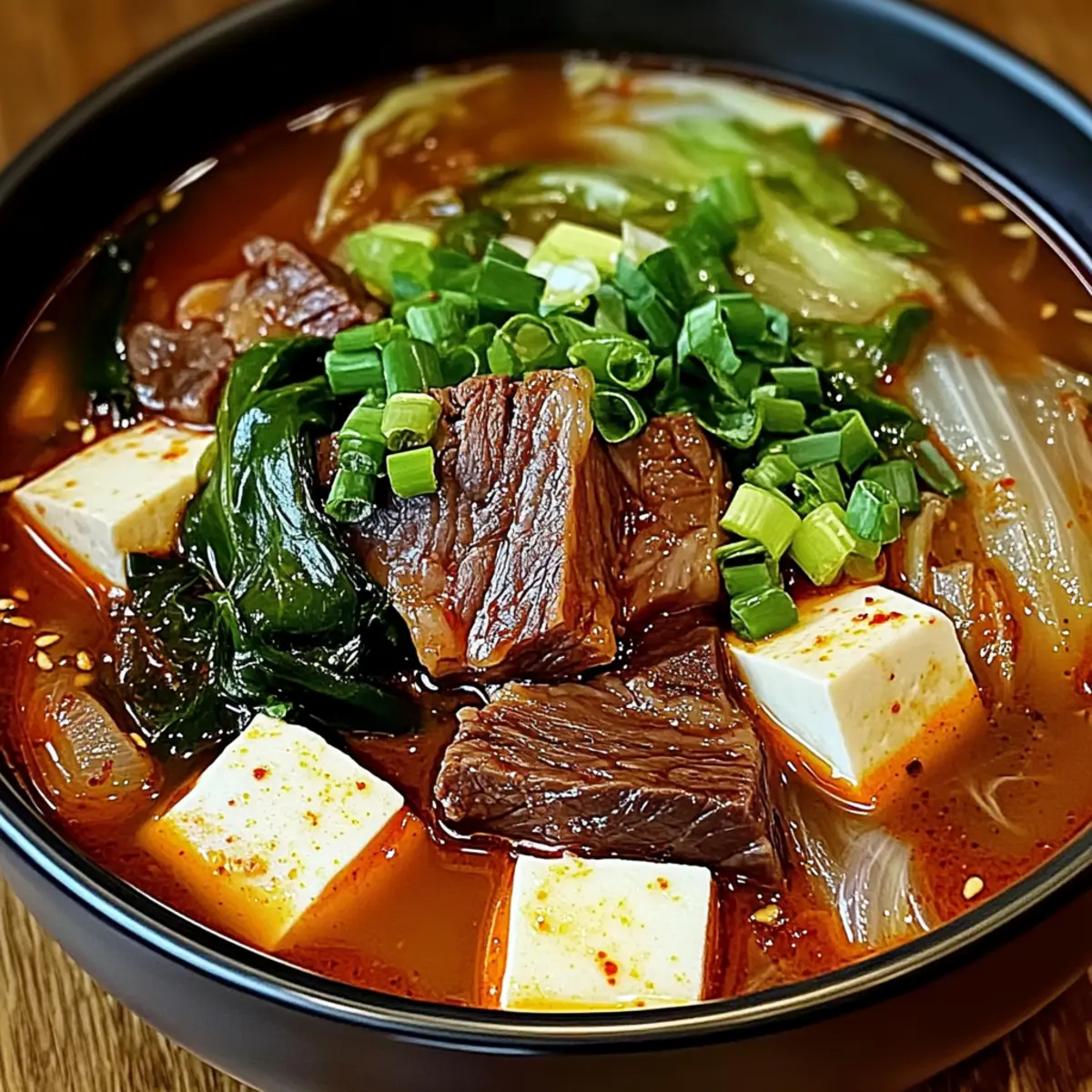
Expert Tips for Savory Korean Winter Soup
- Skimming Impurities: Always skim off any foam or impurities that rise to the surface while simmering; this results in a clearer, cleaner broth that enhances the soup’s flavor.
- Cut Size Matters: Cut your beef brisket into larger chunks for even cooking; smaller pieces may overcook, resulting in an unappetizing texture.
- Gradual Spice Adjustment: Start with less gochujang and gochugaru; you can always add more to reach your desired heat level, ensuring your Savory Korean Winter Soup remains enjoyable for everyone.
- Taste Before Seasoning: Always taste your soup before adding the final seasoning of salt and pepper; this allows you to balance the flavors effectively.
- Vegetable Variations: Don’t hesitate to add or substitute vegetables according to your preferences; incorporating greens like spinach near the end boosts nutrition without compromising taste.
What to Serve with Hearty Korean Winter Soup?
As you cozy up with a steaming bowl of savory goodness, let’s explore delightful sides and pairings that elevate your meal experience.
- Steamed White Rice: This classic accompaniment balances the flavors, providing a neutral base to soak up the rich broth.
- Kimchi: The crunchy, tangy bite of kimchi adds a delightful contrast, enhancing your soup’s flavor profile while introducing probiotic benefits.
- Pickled Vegetables: Bright, tangy pickled veggies offer a refreshing crunch that lightens the meal, making each spoonful crave-worthy.
- Spicy Korean Popcorn: For a fun twist, serve a bowl of spicy popcorn seasoned with gochugaru; it’s a perfect crunchy snack while enjoying the soup.
- Fresh Herbal Salad: A side salad with fresh herbs like cilantro and mint adds brightness and texture, succeeding in cutting through the soup’s richness.
- Creamy Avocado Toast: The creaminess of avocado on toasted bread makes for a delightful contrast, perfect for those dipping moments.
- Ginger Tea: Aid digestion and warm your soul with a soothing cup of ginger tea alongside your meal; its spicy notes complement the soup beautifully.
- Sesame Cookies: For a sweet finish, lightly sweetened sesame cookies provide a lovely nutty bite that wraps up the meal on a comforting note.
- Light Soy Sauce for Dipping: Keep a small dish of light soy sauce or dipping sauce nearby for those who prefer to amplify the umami experience with every bite.
Variations & Substitutions for Savory Korean Winter Soup
Feel free to explore these delightful twists that make this soup even more personalized and enjoyable!
-
Chicken Swap: Substitute the beef brisket with chicken thighs for a lighter, yet still flavorful, option. This change brings a tender texture without sacrificing heartiness.
-
Mushroom Upgrade: Add shiitake or button mushrooms for a delightful earthy flavor. Their umami richness complements the soup beautifully, adding depth to every spoonful.
-
Green Boost: Toss in fresh spinach or kale just minutes before serving for a nutritious pop of green. Not only does it enhance the color, but it also offers a fresh taste and texture.
-
Vegetarian Delight: Replace the meat with cubed eggplant and chickpeas for protein. This option is hearty and filling, ensuring everyone can enjoy this comforting dish.
-
Root Veggies: Incorporate diced carrots or sweet potatoes for added sweetness and texture. They will simmer nicely, infusing a comforting element that’s perfect for the colder months.
-
Noodle Twist: Instead of serving with rice, try mixing in cooked udon noodles. This adds an exciting twist, transforming your soup into a filling noodle dish that feels even cozier.
-
Herb Finish: Top your dish with fresh herbs like cilantro or parsley for a vibrant finish. This not only enhances the flavor but also elevates the presentation, bringing a touch of freshness.
-
Extra Heat: For those who love spice, ramp up the heat by adding more gochujang or even a dash of chili oil. This variation elevates the soup into a fiery delight that will tantalize your taste buds!
By exploring these variations, you can make this Savory Korean Winter Soup your own while delighting family and friends. Don’t forget, if you’re looking for more hearty meal ideas, check out family-friendly recipes.
How to Store and Freeze Savory Korean Winter Soup
Fridge: Store leftover soup in an airtight container for up to 3–4 days. Allow it to cool completely before sealing to maintain flavor and texture.
Freezer: For longer storage, freeze Savory Korean Winter Soup in freezer-safe containers for up to 3 months. Leave some space for expansion as it freezes.
Reheating: Thaw overnight in the refrigerator before reheating. Warm gently on the stove over low heat, adding a splash of water if needed to restore consistency.
Serving: Once reheated, serve hot with fresh cooked rice or udon noodles, garnishing with sliced green onions for vibrant flavor.
Make Ahead Options
These Savory Korean Winter Soup preparations are perfect for busy weeknights! You can chop the vegetables and cube the tofu up to 24 hours in advance, storing them separately in the refrigerator to maintain freshness. Additionally, the broth can be made ahead of time and refrigerated for up to 3 days; just allow it to cool completely before transferring to an airtight container. To serve, simply reheat the broth and add the prepped veggies back in, simmering for a few minutes until everything is warmed through and tender. This way, you can enjoy a comforting bowl of soup with minimal effort, saving you time while still delivering restaurant-quality flavors!
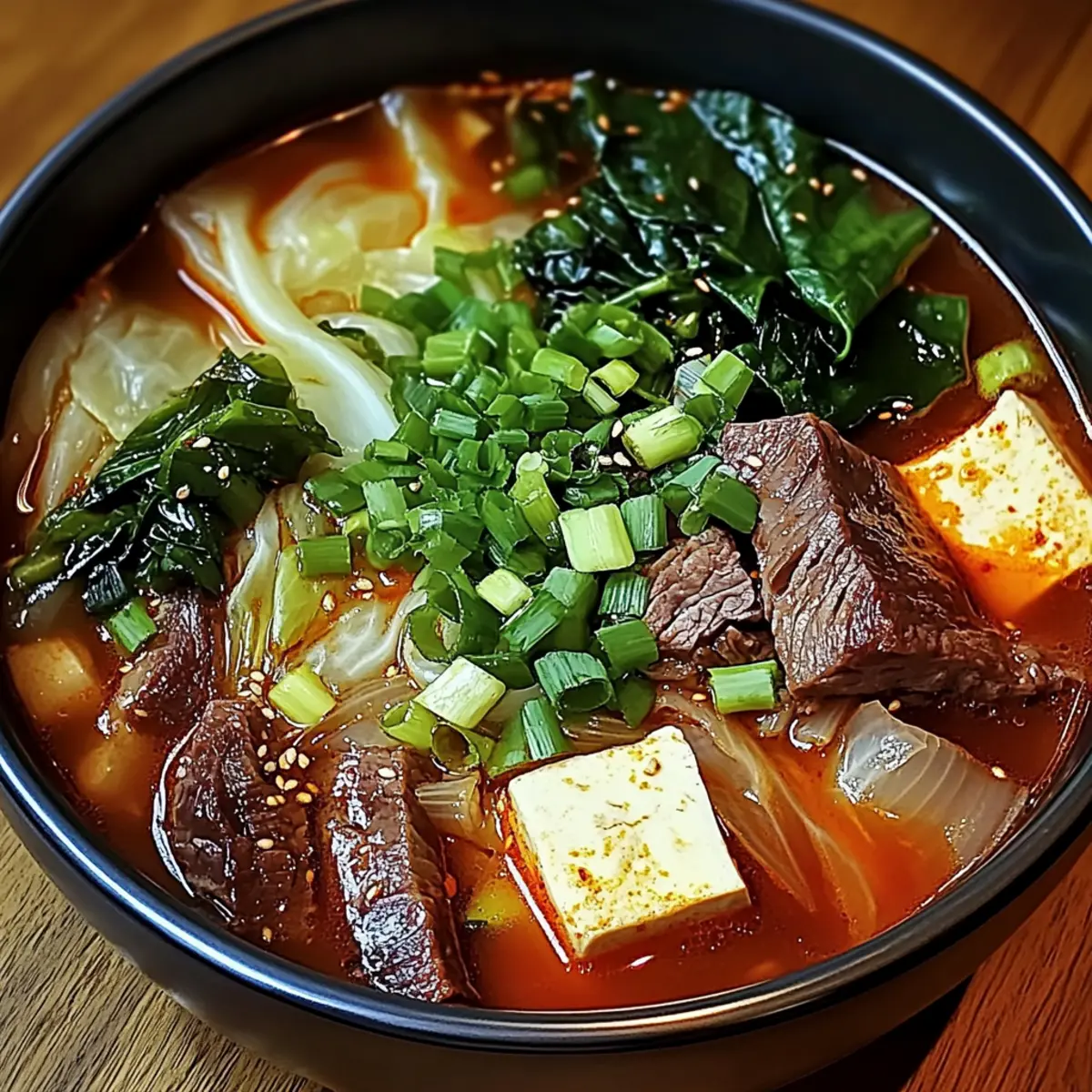
Savory Korean Winter Soup Recipe FAQs
What kind of beef should I use for Savory Korean Winter Soup?
For this recipe, I recommend beef brisket for its rich flavor and tenderness; however, you can also use chuck roast or short ribs for a slightly different texture. Just ensure the meat is well-cooked to achieve that cozy finish.
How should I store leftovers of Savory Korean Winter Soup?
Store leftover soup in an airtight container in the refrigerator for up to 3–4 days. Make sure to let it cool completely before sealing, which helps maintain its amazing flavors and texture.
Can I freeze Savory Korean Winter Soup?
Absolutely! You can freeze the soup in freezer-safe containers for up to 3 months. Make sure to leave some space at the top of the container for the soup to expand as it freezes. When you’re ready to enjoy it, thaw overnight in the fridge and reheat gently on the stove.
What if my soup is too spicy?
If you find your Savory Korean Winter Soup is too spicy, there are a few ways to tone it down. You can add more broth or water to dilute the heat or stir in some additional vegetables or tofu to balance out the spiciness. Another trick is to add a splash of coconut milk for a creamier, less fiery taste.
Are there any dietary substitutions I can make?
Definitely! For a gluten-free version, just swap regular soy sauce with tamari. If you’re looking for vegetarian options, you can replace beef with cubed eggplant and add protein-rich chickpeas. Feel free to get creative with extra veggies like mushrooms or spinach to suit everyone’s tastes!
What should I serve with Savory Korean Winter Soup?
This soup pairs beautifully with cooked white rice or even udon noodles if you’re in the mood for something heartier. For a traditional touch, consider serving it with kimchi on the side—this crunchy, fermented side adds an extra layer of flavor and nutrition that complements the soup wonderfully.
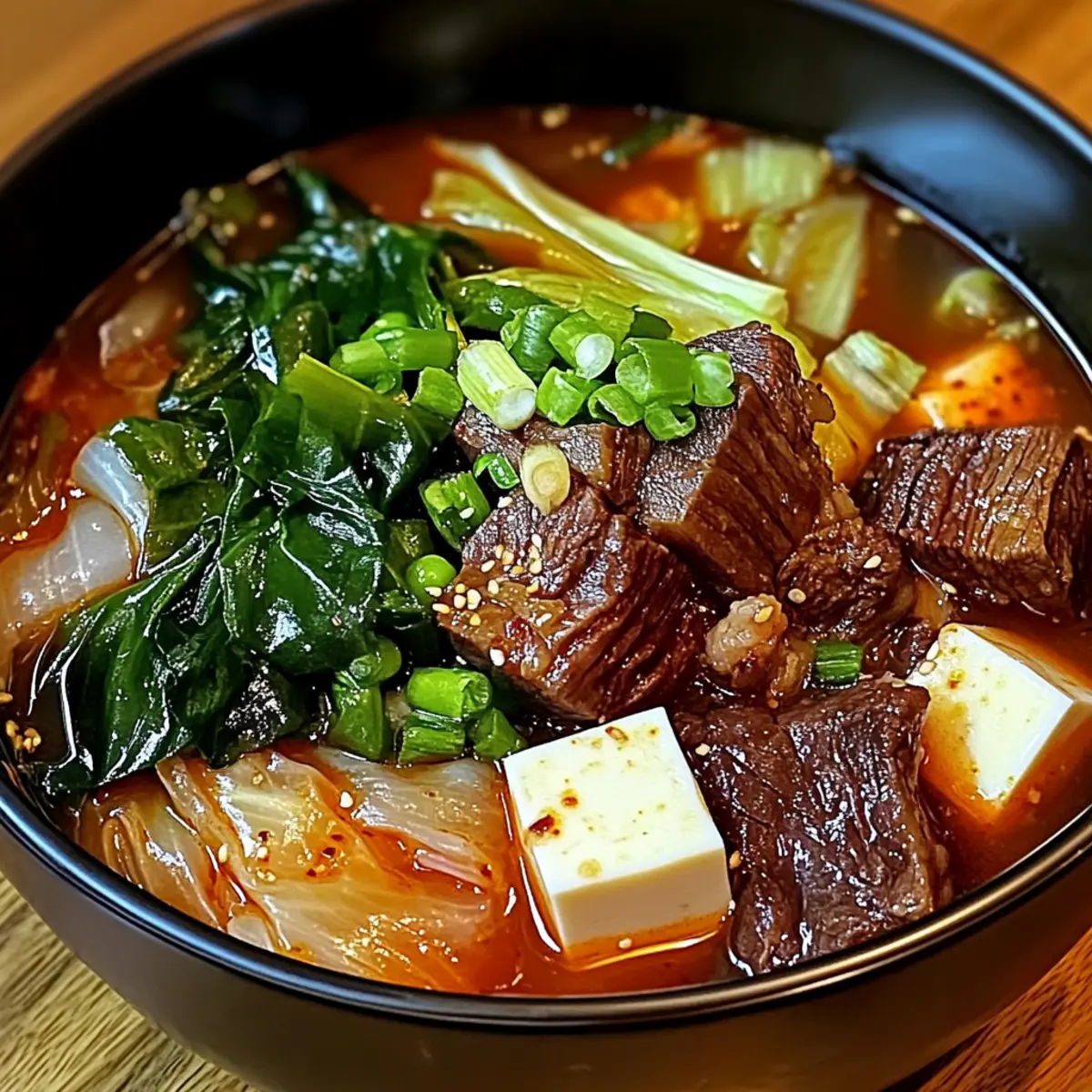
Savory Korean Winter Soup: Comfort in Every Cozy Spoonful
Ingredients
Equipment
Method
- Prepare the Beef Broth: In a large pot, combine the beef brisket with enough water to fully cover it, about 6 cups. Bring to a vigorous boil over high heat, then reduce heat to simmer for 30 minutes, skimming impurities.
- Flavor the Broth: Stir in the soy sauce, gochujang, gochugaru, and minced garlic. Simmer for another 5 minutes to allow flavors to develop.
- Add the Vegetables: Introduce the chopped onion, napa cabbage, cubed tofu, and sliced daikon. Stir well and simmer for another 20 minutes.
- Sauté the Green Onions: Heat sesame oil in a small pan. Add sliced green onions and sauté for 2-3 minutes until fragrant.
- Final Seasoning and Serve: Taste the soup and adjust with salt and pepper. Serve hot with cooked white rice.
Leave a Reply