Ingredients
Equipment
Method
Step-by-Step Instructions
- Start by rinsing your salmon fillets under cool water and patting them dry. Squeeze some fresh lime or lemon juice over the fillets, then generously season with salt, black pepper, and seasoning salt. Let the salmon sit for about 10 minutes to absorb the flavors while you gather the remaining ingredients.
- In a large non-stick skillet, heat 2 tablespoons of neutral cooking oil over medium-high heat. Once the oil is shimmering, gently place the seasoned salmon fillets in the pan. Cook for 5-7 minutes on one side until golden brown; resist the urge to flip until ready to prevent breaking. Carefully turn the salmon over, cooking for another 5-7 minutes before removing the fish to drain on a wire rack.
- After removing the salmon, carefully discard most of the oil from the skillet, leaving about 2 tablespoons. Reduce the heat to medium and add diced onion, minced garlic, chopped bell peppers, and fresh thyme into the skillet. Sauté for about 3-4 minutes until they soften and become fragrant, stirring occasionally to prevent burning.
- Once the aromatics are softened, add diced tomatoes and a whole Scotch bonnet pepper to the skillet. Stir to combine, then pour in the hoisin sauce, soy sauce, and chicken broth. Allow the mixture to simmer for about 5 minutes, stirring occasionally, until the sauce thickens slightly and the vegetables are tender.
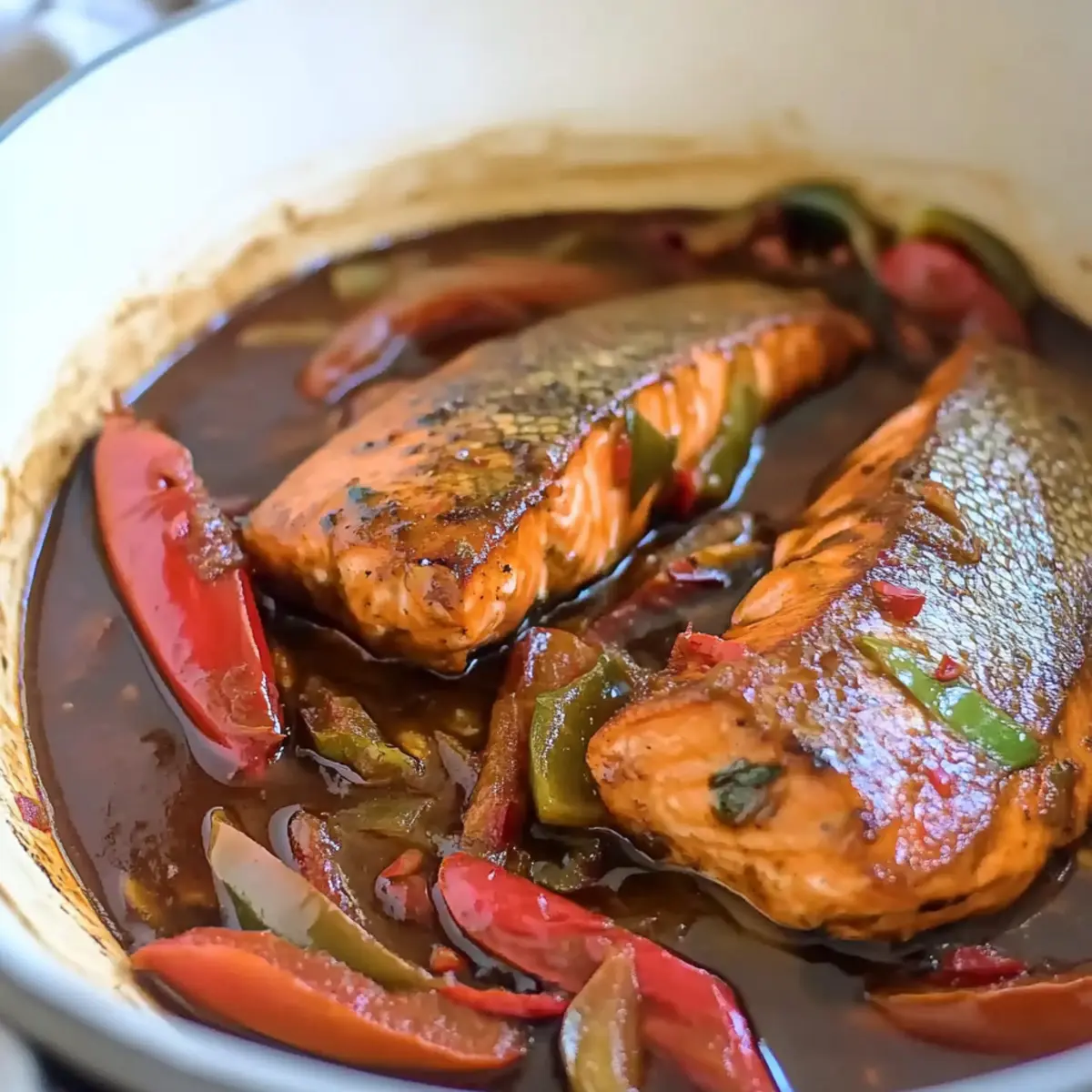
- Gently return the browned salmon fillets to the pan, making sure they’re nestled in the rich sauce. Use a spoon to carefully baste the salmon with the sauce, cover the pan halfway with a lid, and cook for an additional 2-3 minutes on low heat. This step allows the salmon to soak up all those delicious flavors of the brown stew sauce.
- Remove the pan from heat and take out the whole Scotch bonnet if you prefer a milder flavor. Serve your Brown Stew Salmon hot, spooning more sauce over the fillets. Pair it with rice, crusty bread, or steamed vegetables for a satisfying meal that transports you to the Caribbean!
Nutrition
Notes
Ensure the salmon can move freely in the pan before flipping to avoid breaking. Aim for an internal temperature of 145°F. Adjust sauce consistency based on the volume of vegetables used. Let the salmon sit after cooking for a few minutes to allow flavors to meld beautifully.